

Can AI Build an Entire Marketing Strategy?
Can AI Build an Entire Marketing Strategy?
The thing about AI is that it can do everything a marketing strategist does, such as conducting market research, segmenting markets, forecasting, coming up with creative ideas, selecting the media, and optimising campaigns; however, at the moment, it is not quite ready to assume control over marketing strategy in an ethical manner. The best option would be for the AI to do the data work and for marketing strategists to add their expertise.
For businesses that know technology, the debate about AI’s role in marketing is over. The new question is to what extent AI should be used in marketing: just assist in implementing the campaign, or develop the entire strategy from objective to metrics? The answer is that AI can develop a very valuable strategic framework, but a good marketing team has to approve it, polish it, and make all necessary decisions.
What “Building a Marketing Strategy” Really Means
Marketing Strategy is not only about the calendar of content and marketing efforts. The marketing strategy consists of alignment of corporate goals with customer needs, positioning, message, distribution, budget, creativity, and success measurements.
The use of AI is especially useful in several aspects that have been mentioned above. The use of AI allows studying customers’ behaviour, identifying patterns in large data sets, forecasting future demand, evaluating leads, personalising messages and optimising campaigns in real time. After reviewing the use of AI in digital marketing in the existing literature, it has been identified that AI has been used in content personalisation, predictive analytics, campaign optimisation, automation, and customer experience.
However, a strategy always includes decision-making under context, such as the selection of markets, customer segments, pricing strategy, brand positioning, and response to a competitor’s move. AI may help in making decisions based on facts but not make decisions instead of you.
Where AI Performs Strongly
Market and Audience Research
AI has the ability to process trends in searches, customer reviews, website actions, social interactions, sales statistics, and campaigns very quickly. This allows the marketer to understand what is trending, where the customer’s needs lie, and where the gaps in the market are.
The team would not need weeks of work gathering information to come up with an initial understanding of the motivations, objections, triggers, and preferences of the audience. It should be noted that for this to be done correctly, there must be good data quality.
Customer Segmentation and Personalisation
The segmentation process in conventional marketing has mostly involved the use of broad categories such as age, location, or purchase history. But AI goes further than this and identifies the behaviours, intent, and potential actions of the consumer.
This kind of information means that there will be a greater degree of personalisation in email marketing, web personalisation, paid ads, and product suggestions. It can forecast churn, future purchases, and conversion rates and ensure the correct audience is being targeted.
Hyper-personalisation is projected to become the norm by 2026. Using AI in marketing means that marketing messages can be personalised based on the consumer’s behaviours and intent.
Content Planning and Creation
AI can help create clusters of topics, headlines, draft ads, draft emails, draft social media posts, landing pages, and even scripts for videos. The AI can also create short versions of long articles.
But this does not mean that the AI must publish everything without any human intervention. AI-generated content could turn out to be generic, without any facts, or just off-brand. The best way would be to have AI suggest ideas and write initial drafts, after which the marketer takes over.
Channel and Budget Optimization
An AI can analyse performance signals in PPC, social media, emails, SEO and other media. An AI can inform you where to spend your budget, which version of creatives to use and which customer segments will have the highest chance of conversion.
With performance marketing, the smallest enhancement in terms of targeting, bidding, creatives, or timing could be a game changer. The technical aspects of the procedure, such as scheduling, monitoring, and reporting, will all be handled by automated decisions made by the AI system.
Forecasting and Measurement
AI can shift marketing from reporting to forecasting. Instead of asking “what has happened in the past month,” marketers will be able to ask “what is likely to happen” and “how can we make it happen.”
AI can predict customer behaviour, demand, churn, and campaign performance. It becomes much easier to direct resources into areas that yield the best returns.
Where AI Still Falls Short
Strategic Judgment
While an algorithm can detect any correlation, it does not possess knowledge about the business politics, competitive position, brand equity, relationship with customers, or organisational restrictions. The suggested solution can be very efficient, but at the same time, contradictory to brand policies and detrimental to customer trust.
It is up to the person who develops the strategy to evaluate what kind of success should be achieved. Even a successful campaign may result in incorrect customer targeting.
Original Creativity
While AI helps in producing different types of variants, groundbreaking thoughts need human insight to generate – insights like cultural insight, emotional intelligence, humour, experience, and brand insight. AI can help in the creative process, but it will never be able to substitute the human factor of creative thinking.
Ethical and Privacy Considerations
AI-based marketing is very dependent upon data about the consumer. This makes it necessary to take into account issues of consent, transparency, data security, algorithmic bias, and data protection. Given the increasing demands being made on privacy, companies will need to concentrate on obtaining consensual first-party and zero-party data, not just identifiers.
An AI-only strategy will seek to maximise conversions without paying attention to any other considerations. That is a serious risk, particularly in industries such as healthcare, finance, education, and B2B services.
Data Dependency
AI can only be as dependable as its data source. If the data source is incomplete, incorrect, or biased, the advice from the AI will also suffer from the same problems.
That is why companies require proper data hygiene, proper definition of measurements, and periodic reviews by humans. AI should never be used blindly; instead, it should be considered a useful analytical tool.
What an AI-Built Strategy Might Look Like
Consider an example of a growing software company looking to improve the number of qualified leads generated. An AI-enabled approach would first look into analysing web behaviour data, search demand, sales conversations, and previous campaign performance. The analysis may find that a particular audience segment – for instance, operational managers of mid-size organisations – has higher intent levels than the general population.
Based on that, AI could suggest messaging themes addressing the most common objections, create content ideas related to operational efficiency, provide keywords with high potential for conversions, and determine channels including SEO, LinkedIn, email, and paid search.
That is a remarkably complete strategy. But a human strategist would still need to ask important questions. Is this the right customer segment for the company’s long-term goals? Does the messaging reflect the brand’s actual strengths? Are the projected economics realistic? Should the company invest more in thought leadership rather than short-term lead generation?
AI can build the framework. Humans make it commercially and strategically sound.
The Right Model: AI-Led Execution, Human-Led Direction
The most effective marketing organisations will not choose between AI and marketers. They will combine both.
Artificial intelligence can handle scale through analytics, pattern recognition, testing, personalisation, prediction, and automation. Humans, however, should guide the overall direction by shaping positioning, brand voice, creativity, ethics, client empathy, and strategy.
This approach will also prevent the over-dependence on automation. Excessive use of AI will lead to misunderstanding, reduced human interaction, and non-personal communication with the clients. It is not about replacing marketers but about making their job easier.
How Nexotechsoft Helps Businesses Use AI Strategically
This is where Nexotechsoft adds value. An AI-enabled marketing strategy does not only need intelligent systems; it needs the capability to convert business goals into a marketing plan, organise data correctly, develop messages that resonate with customers, and determine what is really important.
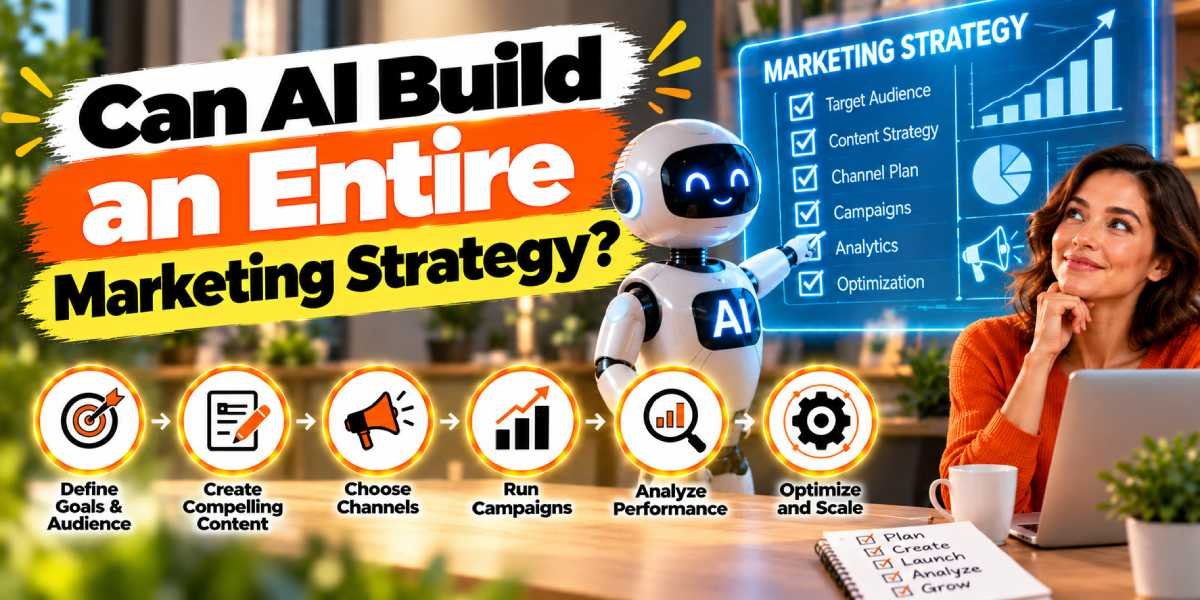
The company ‘nexotechsoft’ provides expert digital marketing services aimed at enabling responsible and productive use of AI in organisations. Our specialists are well-versed in strategy-based marketing, which consists of analyzing the target audience, goal setting, channel planning, content creation, and performance optimization through data-based optimization.
AI should be viewed not as an instrument for the substitution of human marketing, but as an instrument to boost human marketing efforts. This will help us help our clients discover their true potential and positioning, making their campaigns more effective and personalised without losing the element of consistency in branding and ethics.
Practical Steps to Get Started
There is no need for the organisation to automate everything in one go. The best thing for the organisation to do would be to adopt the best possible strategy, which in this case means the use of artificial intelligence in those areas where it makes the most sense.
Firstly, set up a business goal. Instead of using AI, choose something like generating more qualified leads, retaining customers, cutting down acquisition costs, and entering a new market. Then make sure the required data is accurate, available, and collected ethically.
Then apply AI to find insights and opportunities, but only have people approve the strategies. Create the brand guidelines, the review standards, privacy policy, and performance measures.
Conclusion
But then, can artificial intelligence formulate an entire marketing strategy? From a technical perspective, artificial intelligence has the ability to create a very compelling strategy: insights about the target audience, channel suggestions, content strategies, predictions, and optimisation strategies. However, a great marketing strategy requires human guidance.
Artificial intelligence should be seen as the co-pilot of marketing strategy development. Artificial intelligence is capable of processing information in ways that human beings cannot, finding opportunities in information and executing tasks very quickly. However, the marketer has to guide the strategy development process.
The companies that win will not be those that hand their entire strategy to AI. They will be the ones that combine AI’s analytical power with experienced human strategy—and partners such as Nexotechsoft can help make that combination practical, measurable, and growth-focused.